Message from the Principals 4/24/2026
- School Account
- 3 days ago
- 9 min read

Today's Topics:
1: Important Reminders
2: House Points
3: Learning Highlights
1: Important Reminders
April 29 - OPEN SCHOOL
May 4-6 - Golden Week (NO SCHOOL)
May 22 - International Culture Day at the Yomitan Hall
May 25 - Memorial Day (NO SCHOOL)
2: House Points
Basilisk: 6514
Phoenix: 6239
Hydra: 6187
Dragon: 6008
3: Learning Highlights
In the one-year-old class at BeachSide Preschool, the children explored creative play using newspapers. They enjoyed tearing, crumpling, and rolling them into sticks, engaging in a type of dynamic play that is not often experienced at home. The activity sparked excitement and curiosity, and the class looks forward to creating many more meaningful memories together throughout the year.


Taking advantage of the beautiful weather, SeaSide Preschool visited the children’s center. Along the way, the children noticed flowers and insects, fully embracing the feeling of spring. They also greeted people they passed, practicing friendly social interactions. At the center, they ran, explored, and enjoyed active play on the playground.


At Coral Preschool, children are engaging thoughtfully with origami through the use of picture books. As they create a variety of pieces, they demonstrate perseverance by seeking help from peers and teachers when needed. Each completed work is shared with pride, fostering a sense of accomplishment and joy while deepening their engagement in the activity.





Prep Design Class
Learning Goals: 1.03 Develop the ability to create a design.
1.08 Develop the ability to utilize tools and methods with adult supervision.
In Prep Design class, as part of the “A Day in the Life” IPC unit, students completed a paper craft project focused on creating a community helper vehicle.
Throughout the planning and construction phases, students followed the formal design process to guide their work. A central focus of the project was learning how to safely handle tools, including the proper use of a box cutter to cut cardstock and the effective use of a ruler as a cutting guide. Through this experience, students developed both their design thinking skills and their confidence in using tools responsibly.





Grade 1M Design Class
Personal Learning Goal: 1.08 Be able to use tools and techniques following guidance from an adult
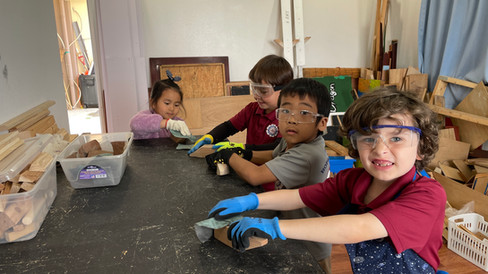
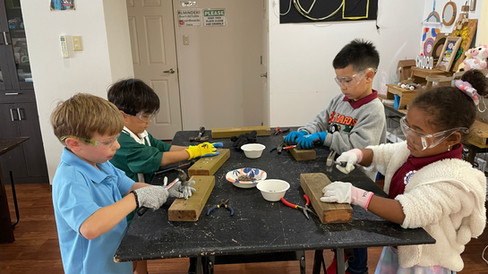
In Grade 1M Design class, as part of the “Live and Let Live” IPC unit, students completed a porcupine woodworking project. The focus of the activity was on developing the ability to safely use tools under adult guidance. Students followed the design process by planning their project, practicing hammering techniques, and preparing their materials by smoothing the wood. They then used hammers to carefully drive nails into the wood to represent the porcupine’s quills, while wearing appropriate safety gear. To complete the project, students added color and decorative elements. As part of their reflection, they created videos on Seesaw to explain what they had learned throughout the process.









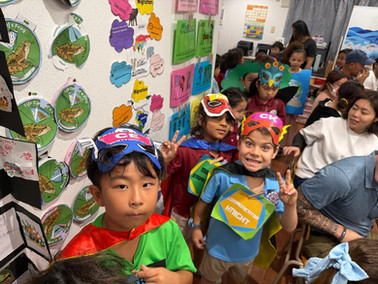
Grade 1 Blue’s recent Exit Point was more than a performance; it was a meaningful reflection of their journey through the “Live and Let Live” unit. Each moment on stage highlighted the growth of the students, not only in their knowledge and skills, but also in their depth of understanding.
Through their acrostic presentations, students demonstrated their learning about living and non-living things, their habitats, and the interconnected nature of the world. They showed a clear understanding that living things depend on one another, as well as on non-living elements, to survive.
The role play performances brought imagination and understanding together. Students took on the roles of various elements such as animals, plants, natural features, and even the sun and Earth, with each character representing an important part of the ecosystem. The class included the PLG Earth Superheroes: Super Thinker, Captain Ethical, Mighty Empathetic, Respectful Guardian, and Communicator Knight. They illustrated how young learners can take meaningful action in caring for the planet. Through these performances, students demonstrated empathy, responsibility, and creativity.
The Exit Point also showcased the students’ growing confidence in public speaking, as well as their ability to collaborate and support one another. Their enthusiasm and pride were evident throughout the performance, contributing to a strong sense of shared accomplishment.
The celebration concluded with a joyful dance titled “A Beautiful Day,” reminding the audience to appreciate the world around them and to value each day. The event reflected the students’ hard work and the significant progress they have made.




Grade 2 Blue has been exploring the IPC unit “How Humans Work,” with a focus on Science. The class investigated the digestive system and developed an understanding of teeth, including the different types and their functions. They also discussed the importance of dental care and the effects of consuming certain beverages too frequently.
To deepen their understanding, the students conducted an experiment using eggs to model tooth enamel. Eggs were placed in water, coffee, and Coca-Cola, and observations were made after several hours and again after 24 hours. The experiment included eggs in different conditions: intact, cracked, and without shells. Students made predictions, shared their ideas, and carefully observed the results.
They discovered that eggs placed in coffee and Coca-Cola became stained regardless of their condition, leading to both fascination and surprise. This prompted meaningful discussions about maintaining healthy teeth, including regular brushing and limiting sugary drinks. Through this investigation, students gained valuable insights into dental health.🦷✨





Grade 2 Maroon
learning Goal: 2.07 Be able to make informed predictions
Grade 2 Maroon has been investigating acids and alkalis as part of the “How Humans Work” unit, with a focus on developing the ability to make informed predictions. The class began exploring vinegar as an acid by placing an egg in a jar of vinegar and observing the changes over time.
Students made predictions prior to the experiment and have been closely monitoring the results. The ongoing observations have sparked curiosity and lively discussions as students share their ideas about the changes taking place. Some students have even extended their learning by replicating the experiment at home. As observations continue into the second day, noticeable changes have already deepened student engagement and understanding.


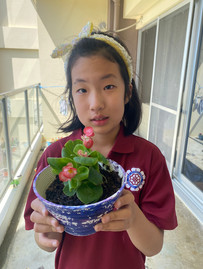
Grade 3 launched their new IPC unit, “Let’s Plant It,” through an engaging Entry Point and Knowledge Harvest. To begin the unit, students initiated seed germination using edamame, lima beans, wildflowers, and blue shisa seeds. The seeds were placed in damp paper towels, sealed in bags, and hung by the window, allowing students to observe root growth over time. They are documenting these changes in observation notebooks and will transfer the seedlings to soil once the roots have sufficiently developed.
In addition, students explored plant propagation using cuttings such as pothos, aloe vera, and elephant ear plants. These were placed in cups around the classroom to receive sunlight, giving students another opportunity to observe root development. As part of the experience, students also painted their own plant pots and planted flowers, further enhancing their connection to the unit.
These plants will be used in an ongoing experiment in which students will investigate how plant growth is affected by changing a single variable, such as sunlight or water. This hands-on approach generated a high level of excitement and engagement among the students.
As part of the Knowledge Harvest, students reflected on their prior understanding by listing different types of plants, designing planter boxes, and sharing their knowledge of plant parts and life cycles. The unit will continue with regular updates to their observation notebooks, as well as a survey of the local environment to identify plants growing near the school.







Grade 4
3.43 Know that different amounts of heating or cooling are required to bring about a change of state.
As part of the Grade 4 “Bake It!” unit, students continued developing their understanding of states of matter.
Through a hands-on “Cloud in a Jar” investigation, students explored how heat energy affects matter. They began by adding hot water to a jar, observing evaporation as the liquid water changed into a gaseous state, visible as steam. The jar was then covered with aluminum foil, and ice was placed on top, cooling the air inside. This caused the water vapor to condense into tiny droplets along the sides of the jar.
To extend their understanding, students made connections between evaporation and condensation and real-world weather phenomena. They discussed how puddles on the playground evaporate due to the sun’s heat, and how water vapor cools and returns to a liquid state, forming condensation such as morning dew on grass. Students also explored how water vapor attaches to particles in the air to form clouds. To model this process, they introduced a small amount of aerosol into the jar and observed cloud formation inside.
The investigation sparked curiosity and enthusiasm, with students posing new scientific questions and suggesting further experiments, such as testing the effects of different water temperatures. Through this experience, they deepened their understanding of how heat energy drives changes in the state of matter while making meaningful connections to the world around them.


As part of their final IPC unit, “Here and Now, There and Then,” Grade 5 students began their learning journey with an engaging Entry Point. They explored key concepts such as countries, continents, and capital cities, while also developing an understanding of the differences between home, host, adopted, and heritage countries.
To apply their learning, students worked collaboratively in groups to select a country represented within their class community. They then created detailed country collages, showcasing important aspects of each nation and celebrating the diversity within the classroom.


In Grade 6 Science, students collaborated in an engaging “treasure hunt” activity to explore the functions of specialized cells. Working together, they investigated different cell types and their roles, building on their prior learning about unicellular organisms as well as plant and animal cells.
This hands-on experience allowed students to deepen their understanding of how cells function within more complex living systems, while also strengthening their collaboration and inquiry skills.


As part of the Grade 7 Exit Point for the unit “Relationship,” students showcased their learning through a series of presentations across multiple subject areas. Each presentation highlighted their understanding of the unit’s Big Idea, demonstrating how relationships influence and connect different disciplines.
Through their work, students reflected a growing ability to make meaningful connections, communicate their ideas clearly, and apply their learning in a variety of contexts.




The Grade 8 Action Ambassadors delivered impactful presentations on chemical pollution to Prep, Grade 1 Blue and Maroon, Grade 2 Blue and Maroon, and Grade 3 students. The presentations were both successful and inspiring, as the students clearly explained a complex issue in a way that was accessible and engaging for younger learners.
Through their presentations, they demonstrated a strong understanding of how chemical pollution affects the environment and shared practical ways to prevent it. The younger students responded with thoughtful questions and insightful comments, showing genuine interest and engagement.
It was also encouraging to hear the actions already being taken by younger learners, including beach clean-ups and efforts to reduce littering. The experience highlighted a shared sense of responsibility and awareness across grade levels, as well as the positive impact of student-led initiatives.








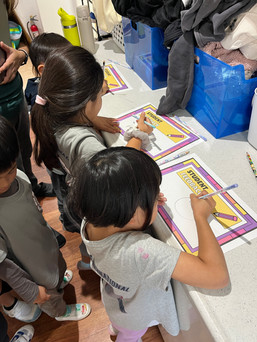


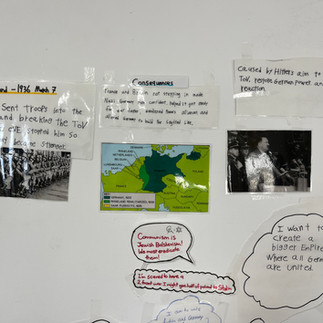
This week in History, Grade 9 students investigated Adolf Hitler’s foreign policy from 1933 to 1939. As part of their learning, they created detailed timelines outlining key events and decisions during this period.
Students examined how Hitler’s aims, including overturning the Treaty of Versailles, expanding German territory, and increasing military power, were closely connected to his actions. They applied critical thinking skills to analyze how each event led to another, illustrating the gradual rise of tension across Europe.
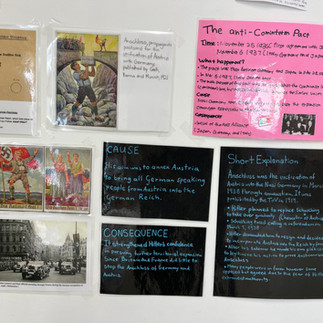
In their discussions, students explored how Hitler’s actions prompted responses from countries such as Britain, France, Italy, and the USSR, and how these reactions influenced subsequent developments. Particular focus was given to the concept of appeasement and how it contributed to Hitler’s growing confidence in pursuing his ambitions.
Additionally, students evaluated the causes and consequences of key decisions and considered the broader impact of appeasement on the escalating crisis. They identified and justified which events they believed were most significant in leading to the outbreak of World War II, supporting their conclusions with historical evidence.





Grade 10 and 11 Global Studies students are currently designing and developing board games that showcase one to four political systems studied in recent weeks. Through this project, students are applying critical thinking, creativity, collaboration, and communication skills to create engaging learning experiences for both middle school and high school learners.
The board games take a variety of forms, including trivia-based card games, strategy board games centered on systems of governance, chess-inspired formats where power dynamics are reimagined, and role-play scenarios that challenge players to respond to political crises. Each game is designed not only to entertain but also to deepen understanding of global political systems.
Students aim to complete their games by mid-May, providing an opportunity for others to play, interact, and learn through these thoughtfully designed experiences.


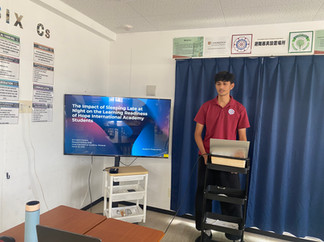
In Grade 12 Clonlara Research Writing Skills II, students successfully defended the research papers they had been developing since Semester 1. Each student completed an original five-chapter study, demonstrating their ability to conduct, analyze, and present academic research.
During the defense sessions, students participated in a rigorous question-and-answer process in which their critical thinking and depth of understanding were challenged by a guest panel. Richie Zuniga played a key role throughout the week, probing students’ research processes and encouraging them to clearly justify how their topics were developed and how their conclusions were reached. Heather MacPhail also contributed by attending one of the sessions and offering thoughtful questions.
This experience provided students with the opportunity to articulate their ideas, defend their work, and reflect on their research journey. The successful completion of this process marks a significant academic achievement for the Grade 12 cohort.